



I’m So Stressed Out! Fact Sheet
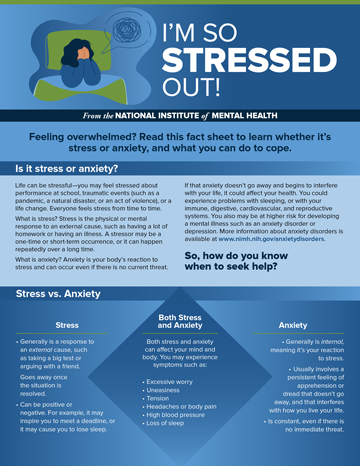
Feeling overwhelmed? Read this fact sheet to learn whether it’s stress or anxiety, and what you can do to cope.
Is it stress or anxiety?
Life can be stressful—you may feel stressed about performance at school, traumatic events (such as a pandemic, a natural disaster, or an act of violence), or a life change. Everyone feels stress from time to time.
What is stress? Stress is the physical or mental response to an external cause, such as having a lot of homework or having an illness. A stressor may be a one-time or short-term occurrence, or it can happen repeatedly over a long time.
What is anxiety? Anxiety is your body's reaction to stress and can occur even if there is no current threat.
If that anxiety doesn’t go away and begins to interfere with your life, it could affect your health. You could experience problems with sleeping, or with your immune, digestive, cardiovascular, and reproductive systems. You also may be at higher risk for developing a mental illness such as an anxiety disorder or depression. Read more about anxiety disorders.
So, how do you know when to seek help?
Stress vs. Anxiety
| Stress | Both Stress and Anxiety | Anxiety |
|---|---|---|
|
Both stress and anxiety can affect your mind and body. You may experience symptoms such as:
|
|
It’s important to manage your stress.
Everyone experiences stress, and sometimes that stress can feel overwhelming. You may be at risk for an anxiety disorder if it feels like you can’t manage the stress and if the symptoms of your stress:
- Interfere with your everyday life.
- Cause you to avoid doing things.
- Seem to be always present.
Coping With Stress and Anxiety
Learning what causes or triggers your stress and what coping techniques work for you can help reduce your anxiety and improve your daily life. It may take trial and error to discover what works best for you. Here are some activities you can try when you start to feel overwhelmed:
- Keep a journal.
- Download an app that provides relaxation exercises (such as deep breathing or visualization) or tips for practicing mindfulness, which is a psychological process of actively paying attention to the present moment.
- Exercise, and make sure you are eating healthy, regular meals.
- Stick to a sleep routine, and make sure you are getting enough sleep.
- Avoid drinking excess caffeine such as soft drinks or coffee.
- Identify and challenge your negative and unhelpful thoughts.
- Reach out to your friends or family members who help you cope in a positive way.
Recognize When You Need More Help
If you are struggling to cope, or the symptoms of your stress or anxiety won’t go away, it may be time to talk to a professional. Psychotherapy (also called talk therapy) and medication are the two main treatments for anxiety, and many people benefit from a combination of the two.
If you are in immediate distress or are thinking about hurting yourself, call or text the 988 Suicide & Crisis Lifeline at 988 or chat at 988lifeline.org .
If you or someone you know has a mental illness, is struggling emotionally, or has concerns about their mental health, there are ways to get help. Read more about getting help.
More Resources
- NIMH: Anxiety Disorders
- NIMH: Caring for Your Mental Health
- NIMH: Child and Adolescent Mental Health
- NIMH: Tips for Talking With a Health Care Provider About Your Mental Health
- Centers for Disease Control and Prevention: Anxiety and Depression in Children
U.S. DEPARTMENT OF HEALTH AND HUMAN SERVICES
National Institutes of Health
NIH Publication No. 20-MH-8125
Reprints
The information in this publication is in the public domain and may be reused or copied without permission. However, you may not reuse or copy images. Please cite the National Institute of Mental Health as the source. Read our copyright policy to learn more about our guidelines for reusing NIMH content.