Science Updates About Treatments
- Developing Tools for Measuring Mental Health Outcomes
-
The National Institutes of Health has funded six projects to develop, test, and validate outcome-focused quality measures for mental health, which are used to understand the impact of interventions when implemented in real-world health care systems and settings.
- Integrated Care for Depression Yields Extended Benefits, Malawi Study Shows
-
An NIMH-funded study showed that incorporating depression treatment into care for chronic health conditions improved well-being for both patients and their families.
- Researchers Investigate Potential Treatment for Eliminating HIV from the Brain
-
In a recent NIMH-funded study, researchers explored a potential new way of clearing HIV from the brain by testing a drug that targets a type of immune cell known as macrophages.
- New Hope for Rapid-Acting Depression Treatment
-
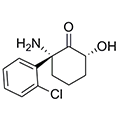
A new study, funded in part by the National Institute of Mental Health, showed that a new medication derived from ketamine is safe and acceptable for use in humans, setting the stage for clinical trials testing it for hard-to-treat mental disorders like severe depression.
- Smartphone Data May Not Reliably Predict Depression Risk in Diverse Groups
-
NIMH-supported research suggests AI tools built on smartphone data may struggle to predict clinical outcomes like depression in large and diverse groups of people.
- New Gene Delivery Method Paves the Way for Advanced Brain Therapies
-
A new study, funded in part by the National Institute of Mental Health, describes a promising new gene delivery vehicle that could advance treatment for brain disorders.
- Collaborative Care Could Help Reduce Disparities in Mental Health Treatment
-
In an NIMH-funded study, a comprehensive collaborative care intervention significantly reduced post-traumatic stress disorder (PTSD) symptoms among trauma patients from racial and ethnic minority backgrounds.
- Understanding the Availability of Mental Telehealth Services
-
In an NIMH-funded study, researchers examine the availability and structure of mental telehealth services.
- Basic Research Powers the First Medication for Postpartum Depression
-
• 75th Anniversary
Decades of NIMH-supported basic research led to a pioneering treatment for postpartum depression and continues to power exciting advances in women's mental health care.
- Understanding the Underpinnings of Sensory Hypersensitivity in SCN2A-Associated Autism
-
In this NIMH-supported study, researchers investigated the neural underpinnings of sensory hypersensitivity in SCN2A-associated autism.
- Gene-Based Therapy Restores Cellular Development and Function in Brain Cells From People With Timothy Syndrome
-
In a proof-of-concept study, researchers demonstrated the effectiveness of a potential new therapy for Timothy syndrome, an often life-threatening and rare genetic disorder that affects a wide range of bodily systems, leading to severe cardiac, neurological, and psychiatric symptoms as well as physical differences such as webbed fingers and toes.
- Novel Treatment Helps Children With Severe Irritability
-
A new study by NIMH researchers demonstrated the effectiveness, feasibility, and safety of exposure-based cognitive behavioral therapy for severe irritability and temper outbursts in children. The positive results set the foundation to continue exploring exposure therapy as a potential treatment for childhood irritability.
- Decades of Dedication and Collaboration: Unraveling the HIV Mystery
-
• 75th Anniversary
In celebration of NIMHs 75th anniversary, we reflect on decades of work by the institute to understand and eradicate HIV.
- Cognitive Behavioral Therapy Alters Brain Activity in Children With Anxiety
-
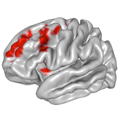
Researchers at the National Institute of Mental Health found that unmedicated children with anxiety disorders show widespread overactivation in brain functioning and that treatment with cognitive behavioral therapy led to a clinically significant drop in anxiety symptoms and improved brain functioning.
- Magnetic Seizure Therapy as Effective as Electroconvulsive Therapy for Treating Depression
-
This clinical trial found that MST is equally effective at reducing depression symptoms as ECT, but with fewer side effects.
- Cracking the Ketamine Code
-
• 75th Anniversary
NIMH supported science and NIMH researchers helped pave the way for the development of ketamine—a groundbreaking treatment that has improved the lives of those who are impacted by treatment-resistant depression.
- Helping People With Serious Mental Illness Quit Smoking
-
In a study funded by the National Institute of Mental Health and published in JAMA Psychiatry, Gail Daumit, M.D., of Johns Hopkins University, A. Eden Evins, M.D., of Massachusetts General Hospital and Harvard Medical School, and colleagues developed a tobacco smoking cessation intervention for people with serious mental illness.
- RAISE-ing the Standard of Care for Schizophrenia: The Rapid Adoption of Coordinated Specialty Care in the United States
-
• 75th Anniversary
The Recovery After an Initial Schizophrenia Episode research initiative, launched by NIMH to test the effectiveness of coordinated specialty care to treat first-episode psychosis, has transformed the mental health landscape in the United States and helped thousands of people with schizophrenia achieve better outcomes.
- Chatbot Encourages People With Eating Disorders to Seek Care
-
In a new NIMH-funded study, Ellen Fitzsimmons-Craft, Ph.D., an associate professor of psychiatry at Washington University School of Medicine, and colleagues developed a chatbot to encourage people with eating disorders to connect with care.
- Breaking Down Barriers to HIV Medication Access
-
Researchers investigated whether home delivery of ART for a modest fee could help improve ART access and use, finding it resulted in increased viral suppression in participants compared with clinic-based medication distribution.
- Long-acting antiretroviral therapy suppresses HIV among people with unstable housing, mental illnesses, substance use disorder
-
A long-acting antiretroviral treatment given every four to eight weeks, and delivered with comprehensive support services, suppressed HIV in people who were previously not virologically suppressed.
- Brief Cognitive Training May Extend the Antidepressant Effects of Ketamine
-
An NIMH-supported study suggests that a brief self-association training program can extend the effects of a single ketamine infusion by shifting people’s negative self-beliefs.
- Study Shows REACH VET Program Effective for Veterans at High Risk for Suicide
-
A recent NIMH co-authored study shows that a Department of Veterans Affairs suicide prevention program was associated with fewer inpatient mental health admissions and emergency department visits, and a 5 percent reduction in documented suicide attempts.
- Mindful Mood Balance Effective for Treating Residual Depressive Symptoms and Suicidal Ideation
-
NIMH-supported researchers have found an online mindfulness-based cognitive behavioral therapy—called Mindful Mood Balance—is effective at reducing residual depressive symptoms and at reducing suicidal ideation in those who experience these symptoms.
- New Approach Allows Magnetic Brain Stimulation to Target Deep Brain Structures
-
TMS can only directly stimulate the outermost layer of the brain, but NIMH researchers have found that mapping a person’s brain architecture may make it possible to guide TMS to deep brain targets.
- Personalizing Deep Brain Stimulation for Treatment-Resistant Depression
-
A recent NIMH-supported study investigated whether deep brain stimulation could be personalized for individuals with treatment-resistant depression.
- NIH, FDA and 15 Private Organizations Join Forces to Increase Effective Gene Therapies for Rare Diseases
-
The newly launched Bespoke Gene Therapy Consortium (BGTC), part of the NIH Accelerating Medicines Partnership (AMP) program, aims to optimize and streamline the gene therapy development process to help fill the unmet medical needs of people with rare diseases.
- Researchers Use Exosome-Based Strategy to Block HIV in Mice
-
In this NIMH-funded study, researchers used exosomes to deliver novel protein into the cells of mice infected with HIV. The protein attached to HIV’s genetic material and prevented it from replicating, resulting in reduced levels of HIV in the bone marrow, spleen, and brain.
- Improved Emotion Regulation in Dialectical Behavior Therapy Reduces Suicide Risk in Youth
-
An analysis of clinical trial data shows that improvements in emotion regulation in youth at high risk for suicide who received dialectical behavior therapy (DBT) led to a reduction in self-harm behaviors.
- NIH Initiative Expands Access to Resources for Early Psychosis Treatment and Research
-
The Early Psychosis Intervention Network (EPINET), an NIMH initiative aimed at determining how to best provide treatment for individuals experiencing symptoms of early psychosis, is increasing access to resources for researchers, providers, and families through a growing network of research hubs and a new website.
- Using Mobile Technology to Improve Care for Teens with Depression
-
In a project funded by the NIMH Small Business Technology Transfer program, researchers are investigating whether mobile technology can be used to create a passive monitoring system that can predict teens’ depressive symptoms and improve the quality of their care.
- NIMH’s Carlos Zarate Jr., M.D., Elected to National Academy of Medicine
-
Carlos Zarate Jr., M.D., chief of the Experimental Therapeutics and Pathophysiology Branch within the NIMH Intramural Research Program, has been elected to the National Academy of Medicine.
- NIMH Part of Collaborative Effort to Advance Early Intervention for Individuals at Risk of Developing Schizophrenia
-
NIMH has joined with other NIH Institutes in launching an new Accelerating Medicines Partnership focused on advancing the development of better ways to identify and treat those at clinical high risk for psychosis.
- Transforming Mental Health Care Through ALACRITY
-
In 2018, 11.4 million adults in the United States experienced a serious mental illness, such as schizophrenia-spectrum disorders, severe bipolar disorder, and severe depression.
- Combined Electroconvulsive Therapy and Venlafaxine a Well-Tolerated Depression Treatment for Older Adults
-
The use of right unilateral ultrabrief pulse (RUL-UB) electroconvulsive therapy (ECT) in combination with the antidepressant venlafaxine to treat depression in elderly patients is well tolerated and results in minimal neurocognitive side effects, according to a new NIH-funded study published in the American Journal of Geriatric Psychiatry.
- Neural Signature Identifies People Likely to Respond to Antidepressant Medication
-
NIH-funded research uses machine learning algorithm to predict individual response to a commonly-prescribed antidepressant.
- Side Effects Mild, Brief with Single Antidepressant Dose of Intravenous Ketamine
-
A single, low-dose ketamine infusion was relatively free of side effects for patients with treatment-resistant depression.
- NIH Announces Funding Awards for National Early Psychosis Learning Community
-
NIMH awarded six research grants for studies to develop a learning health care system for the treatment of early psychosis.
- Bench-to-Bedside: NIMH Research Leading to Brexanolone, First-Ever Drug Specifically for Postpartum Depression
-
FDA approval of the postpartum depression treatment brexanolone represents the final phase of a bench-to-bedside journey for this drug — a journey that began in the NIMH Intramural Research Program. NIMH experts are available to provide information on postpartum depression and the importance of, and the science underlying, this new drug.
- Studies Support Use of Team-Based Care for Early Psychosis
-
Two recent studies add to the evidence that team-based early intervention services are feasible in real-world health care settings and result in improved outcomes for patients.
- Team-based Care Optimizes Medication Treatment for First Episode Psychosis
-
Findings from NIMH’s Recovery After an Initial Schizophrenia Episode (RAISE) project indicate that team-based coordinated specialty care (CSC) for first episode psychosis (FEP) results in more optimal prescribing of antipsychotics and fewer side effects when compared with typical community care.
- A Shorter—but Effective—Treatment for PTSD
-
Research supported by the National Institute of Mental Health has shown that a shorter therapy (written exposure therapy) may be just as effective as lengthier first-line treatments for PTSD.
- Therapy Reduces Risk in Suicidal Youth
-
A recent clinical trial of a psychotherapy called dialectical behavior therapy (DBT)—which has been shown to be effective in reducing suicide-related behavior in adults—showed that DBT can also reduce suicide attempts and suicidal behavior in adolescents.
- Delay in HIV Treatment Associated with Brain Atrophy
-
People infected with the human immunodeficiency virus, known as HIV, display reductions in brain volume compared with people who are not infected with HIV, but now an NIMH-funded study has shed light on the course of this deterioration and shows that antiretroviral treatment started in the first few years of infection may stop these brain changes.
- Molecular Secrets Revealed: Antipsychotic Docked in its Receptor
-
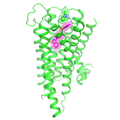
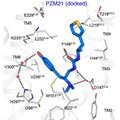
Scientists have deciphered the molecular structure of a widely-prescribed antipsychotic docked in its key human brain receptor. The discovery may hold clues to designing better treatments for schizophrenia, bipolar disorder and other mental illnesses.
- Guidelines published for treating PANS/PANDAS
-
An expert panel has published guidelines for treatment of Pediatric Acute Onset Neuropsychiatric Syndrome (PANS) and a subset of patients diagnosed with PAN Disorder Associated with Streptococcal Infection (PANDAS).
- Imaging Pinpoints Brain Circuits Changed by PTSD Therapy
-
Using brain imaging to track the effects of treatment of post-traumatic stress disorder (PTSD), scientists have identified a brain circuit on which a frequently used and effective psychotherapy (prolonged exposure) acts to quell symptoms. The findings help explain why the neural circuit identified is a promising target for additional treatment development, including brain stimulation therapies.
- Pediatrics-based Brief Therapy Outdoes Referral for Youths with Anxiety and Depression
-
A streamlined behavioral therapy delivered in a pediatrics practice offered much greater benefit to youth with anxiety and depression than a more standard referral to mental health care with follow-up in a clinical trial comparing the two approaches.
- NIMH to Host Multimodal Brain Stimulation Speaker Series
-
Beginning May 31, 2017, the National Institute of Mental Health (NIMH) will launch a speaker series intended to bring together leaders in the field conducting research using non-invasive brain stimulation and functional imaging including EEG, fMRI, and transcranial magnetic stimulation (TMS).
- Brain “Relay” Also Key to Holding Thoughts in Mind
-
Long overlooked as a mere “relay,” an egg-like structure in the middle of the brain also turns out to play a pivotal role in tuning-up thinking circuity. A trio of studies in mice are revealing that the thalamus sustains the ability to distinguish categories and hold thoughts in mind. It might even become a target for interventions for psychiatric disorders marked by working memory problems, such as schizophrenia.
- Prescribing Patterns Change Following Direct Marketing Restrictions
-
A study of how policies restricting pharmaceutical promotion to physicians affect medication prescribing found that physicians in academic medical centers (AMCs) prescribed fewer of the promoted drugs, and more non-promoted drugs in the same drug classes, following policy changes to restrict marketing activities at those medical centers.
- Revealed: LSD Docked in its Human Brain Target
-
Scientists have discovered the molecular structure of LSD in its human brain receptor.
- Sex Hormone–Sensitive Gene Complex Linked to Premenstrual Mood Disorder
-
Researchers have discovered molecular mechanisms that may underlie a woman’s susceptibility to disabling irritability, sadness, and anxiety in the days leading up to her menstrual period.
- Adding Better Mental Health Care to Primary Care
-
Medicare’s new policy supports Collaborative Care and could improve the lives of millions of people with behavioral health conditions.
- Designer Agent Blocks Pain in Mice Without Morphine’s Side Effects
-
Scientists have synthesized a molecule with a unique profile of highly specific pain-relieving properties and demonstrated its efficacy in mice.
- Electroconvulsive Therapy Lifts Depression, Sustains Remission in Older Adults
-
An individualized program of follow-up treatment with electroconvulsive therapy (ECT) combined with an antidepressant was effective in preventing relapse in patients 60 years and older who had had a successful initial course of treatment for severe depression.
- Ketamine Lifts Depression via a Byproduct of its Metabolism
-
A chemical byproduct, or metabolite, created as the body breaks down likely holds the secret to its rapid antidepressant action .
- Facebook Q&A on Electroconvulsive Therapy
-
On March 17, 2016, NIMH hosts a Facebook Q&A on electroconvulsive therapy with expert Dr. Sarah Lisanby.
- A BRIGHT Technological Future for Mental Health Trials
-
Is mobile mental health research the next frontier for smartphones? Based on Dr. Patricia Areán’s pioneering BRIGHTEN study, research via smartphone app is already a reality.
- Team-based Treatment for First Episode Psychosis Found to be High Value
-
Coordinated Specialty Care for First Episode Psychosis is Cost Effective