Science Updates About Depression
- Integrated Care for Depression Yields Extended Benefits, Malawi Study Shows
-
An NIMH-funded study showed that incorporating depression treatment into care for chronic health conditions improved well-being for both patients and their families.
- New Hope for Rapid-Acting Depression Treatment
-
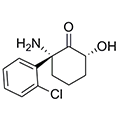
A new study, funded in part by the National Institute of Mental Health, showed that a new medication derived from ketamine is safe and acceptable for use in humans, setting the stage for clinical trials testing it for hard-to-treat mental disorders like severe depression.
- Smartphone Data May Not Reliably Predict Depression Risk in Diverse Groups
-
NIMH-supported research suggests AI tools built on smartphone data may struggle to predict clinical outcomes like depression in large and diverse groups of people.
- Noninvasively Stimulating Deep Brain Areas to Treat Depression Symptoms
-
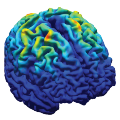
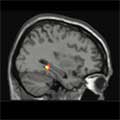
In a new neuroimaging study funded by the National Institute of Mental Health, researchers used repetitive transcranial magnetic stimulation to target regions deep in the brain to help reduce depression symptoms.
- Scientists Map Networks Regulating Gene Function in the Human Brain
-
An NIMH-funded research consortium has produced the largest and most advanced multidimensional maps of gene regulation networks in the brains of people with and without mental disorders.
- Basic Research Powers the First Medication for Postpartum Depression
-
• 75th Anniversary
Decades of NIMH-supported basic research led to a pioneering treatment for postpartum depression and continues to power exciting advances in women's mental health care.
- Intervention Reduces Likelihood of Developing Postpartum Anxiety and Depression by More Than 70%
-
Results from a large clinical trial funded by the National Institutes of Health show that an intervention for anxiety provided to pregnant women living in Pakistan significantly reduced the likelihood of the women developing moderate-to-severe anxiety, depression, or both six weeks after birth.
- Magnetic Seizure Therapy as Effective as Electroconvulsive Therapy for Treating Depression
-
This clinical trial found that MST is equally effective at reducing depression symptoms as ECT, but with fewer side effects.
- Cracking the Ketamine Code
-
• 75th Anniversary
NIMH supported science and NIMH researchers helped pave the way for the development of ketamine—a groundbreaking treatment that has improved the lives of those who are impacted by treatment-resistant depression.
- Mothers' Difficult Childhoods Impact Their Children’s Mental Health
-
In this NIMH-funded study, researchers examined how trauma gets passed from one generation to the next.
- Population Study Finds Depression Is Different Before, During, and After Pregnancy
-
New NIMH-funded research tracked population-level rates of postpartum depression among new mothers before, during, and after pregnancy.
- Brief Cognitive Training May Extend the Antidepressant Effects of Ketamine
-
An NIMH-supported study suggests that a brief self-association training program can extend the effects of a single ketamine infusion by shifting people’s negative self-beliefs.
- Family-Based Intervention Lowers Long-Term Suicide Risk in Youth
-
In a recent study supported by the National Institute of Mental Health, researchers examined the impact of a family-based intervention on suicide risk in youth and found risk-reduction benefits up to 10 years later.
- Mindful Mood Balance Effective for Treating Residual Depressive Symptoms and Suicidal Ideation
-
NIMH-supported researchers have found an online mindfulness-based cognitive behavioral therapy—called Mindful Mood Balance—is effective at reducing residual depressive symptoms and at reducing suicidal ideation in those who experience these symptoms.
- New Approach Allows Magnetic Brain Stimulation to Target Deep Brain Structures
-
TMS can only directly stimulate the outermost layer of the brain, but NIMH researchers have found that mapping a person’s brain architecture may make it possible to guide TMS to deep brain targets.
- Personalizing Deep Brain Stimulation for Treatment-Resistant Depression
-
A recent NIMH-supported study investigated whether deep brain stimulation could be personalized for individuals with treatment-resistant depression.
- Assessing Suicide Risk Among Childbearing Women in the U.S. Before and After Giving Birth
-
NIMH-supported researchers investigated suicide risk among women in the year before and year after giving birth.
- NIMH Addresses Critical Need for Rapid-Acting Interventions for Severe Suicide Risk
-
NIMH is working to meet the urgent need for rapid-acting suicide prevention interventions by supporting research investigating the feasibility and safety of treatment protocols that have the potential to quickly reduce severe suicide risk in youth and adults.
- Gene Readouts Contribute To Distinctness of Mental Disorders
-
A new study conducted by researchers at NIMH suggests that differences in the expression of gene transcripts – readouts copied from DNA that help maintain and build our cells – may hold the key to understanding how mental disorders with shared genetic risk factors result in different patterns of onset, symptoms, course of illness, and treatment responses.
- Using Mobile Technology to Improve Care for Teens with Depression
-
In a project funded by the NIMH Small Business Technology Transfer program, researchers are investigating whether mobile technology can be used to create a passive monitoring system that can predict teens’ depressive symptoms and improve the quality of their care.
- NIMH’s Carlos Zarate Jr., M.D., Elected to National Academy of Medicine
-
Carlos Zarate Jr., M.D., chief of the Experimental Therapeutics and Pathophysiology Branch within the NIMH Intramural Research Program, has been elected to the National Academy of Medicine.
- Infant Temperament Predicts Personality More Than 20 Years Later
-
Researchers investigating how temperament shapes adult life-course outcomes have found that behavioral inhibition in infancy predicts a reserved, introverted personality at age 26 and for some, a risk of internalizing psychopathology such as anxiety and depression.
- Fast-Fail Trial Shows New Approach to Identifying Brain Targets for Clinical Treatments
-
An innovative NIMH-funded trial shows that a receptor involved in the brain’s reward system may be a viable target for treating anhedonia (or lack of pleasure), a key symptom of several mood and anxiety disorders.
- Combined Electroconvulsive Therapy and Venlafaxine a Well-Tolerated Depression Treatment for Older Adults
-
The use of right unilateral ultrabrief pulse (RUL-UB) electroconvulsive therapy (ECT) in combination with the antidepressant venlafaxine to treat depression in elderly patients is well tolerated and results in minimal neurocognitive side effects, according to a new NIH-funded study published in the American Journal of Geriatric Psychiatry.
- Developing Rapid, Accurate Assessment of Mental Disorders, Suicide Risk in Youth
-
For many adults who have a mental disorder, symptoms were present—but often not recognized or addressed—in childhood and adolescence. Early treatment can help prevent more severe, lasting impairment or disability as a child grows up.
- Neural Signature Identifies People Likely to Respond to Antidepressant Medication
-
NIH-funded research uses machine learning algorithm to predict individual response to a commonly-prescribed antidepressant.
- Side Effects Mild, Brief with Single Antidepressant Dose of Intravenous Ketamine
-
A single, low-dose ketamine infusion was relatively free of side effects for patients with treatment-resistant depression.
- Study Reveals Sex-Based Differences in the Development of Brain Hubs Involved in Memory and Emotion
-
Researchers have uncovered sex-based differences in the development of the hippocampus and amygdala—brain areas that have been implicated in the biology of several mental disorders that impact males and females differently.
- Mental Health Research Centers Forge Collaborations – with ALACRITY
-
Mental health research center directors emerged from a recent meeting with a renewed commitment to help each other achieve their common mission – to transform care of children, adolescents and adults with severe psychiatric disorders.
- Release of “13 Reasons Why” Associated with Increase in Youth Suicide Rates
-
A study conducted by researchers at several universities, hospitals, and the National Institute of Mental Health (NIMH) found that the Netflix show “13 Reasons Why” was associated with a 28.9% increase in suicide rates among U.S. youth ages 10-17 in the month (April 2017) following the shows release, after accounting for ongoing trends in suicide rates.
- Nationwide Essay Contest Challenges High Schoolers to be Frank About Mental Health
-
The National Institutes of Health invites students ages 16 to 18 years old to participate in the “Speaking Up About Mental Health!” essay contest to explore ways to address the stigma and social barriers that adolescents from racial and ethnic minority populations may face when seeking mental health treatment.
- Ketamine Reverses Neural Changes Underlying Depression-Related Behaviors in Mice
-
Researchers have identified ketamine-induced brain-related changes that are responsible for maintaining the remission of behaviors related to depression in mice — findings that may help researchers develop interventions that promote lasting remission of depression in humans.
- Bench-to-Bedside: NIMH Research Leading to Brexanolone, First-Ever Drug Specifically for Postpartum Depression
-
FDA approval of the postpartum depression treatment brexanolone represents the final phase of a bench-to-bedside journey for this drug — a journey that began in the NIMH Intramural Research Program. NIMH experts are available to provide information on postpartum depression and the importance of, and the science underlying, this new drug.
- NIH Study Reveals Differences in Brain Activity in Children with Anhedonia
-
Researchers have identified changes in brain connectivity and brain activity during rest and reward anticipation in children with anhedonia, a condition where people lose interest and pleasure in activities they used to enjoy.
- NIH Study Shows Many Preteens Screen Positive for Suicide Risk During ER Visits
-
A research team found nearly one-third of youth ages 10 to 12 years screened positive for suicide risk in emergency department settings, including those seeking help for physical concerns only.
- Dynamic Associations Among Motor Activity, Sleep, Energy, and Mood Could Suggest New Focus for Depression Treatment
-
A new study looking at interactions among sleep, energy, activity level, and mood suggests that instability in activity and sleep systems could lead to mood changes. The findings suggest new targets for depression treatment.
- Intervention Shows Promise for Treating Depression in Preschool-Aged Children
-
Researchers funded by the National Institutes of Health have shown that a therapy-based treatment for disruptive behavioral disorders can be adapted and used as an effective treatment option for early childhood depression.
- NIMH to Host Twitter Chat on Teen Depression
-
On May 3, 2018, join NIMH for a Twitter chat on teen depression with experts Dr. Argyris Stringaris and Dr. Ken Towbin.
- Suspect Molecules Overlap in Autism, Schizophrenia, Bipolar Disorder
-
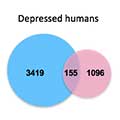
Depression, schizophrenia and autism spectrum disorder share some of the same patterns of suspect gene expression – molecular signatures.
- NIMH Twitter Chat on Seasonal Affective Disorder
-
On February 20, 2018, join NIMH for a Twitter chat on Seasonal Affective Disorder with expert Dr. Matthew Rudorfer.
- Brain’s Alertness Circuitry Conserved Through Evolution
-
Using a molecular method likely to become widely adopted by the field, researchers have discovered brain circuitry essential for alertness – and for brain states more generally.
- Depression’s “Transcriptional Signatures” Differ in Men vs. Women
-
Brain gene expression associated with depression differed markedly between men and women. Such divergent “transcriptional signatures” may signal divergent underlying illness processes requiring sex-specific treatments.
- Webinar: RDoC - Fear & Anxiety: From Mechanisms to Implementation
-
This November 2016 RDoC webinar highlights the role of fear and anxiety in disorders such as phobias and depression.
- Pediatrics-based Brief Therapy Outdoes Referral for Youths with Anxiety and Depression
-
A streamlined behavioral therapy delivered in a pediatrics practice offered much greater benefit to youth with anxiety and depression than a more standard referral to mental health care with follow-up in a clinical trial comparing the two approaches.
- NIMH Grantee Wins One of Science’s Most Coveted Prizes
-
NIMH grantee Karl Deisseroth, M.D., Ph.D., of Stanford University, has been awarded one of science’s most generous prizes. A German foundation presented the inventor of technologies that are transforming neuroscience with its 4 million euros Fresenius Prize.
- Estrogen Alters Memory Circuit Function in Women with Gene Variant
-
Brain scans reveal that fluctuations in estrogen can trigger atypical functioning in a key brain memory circuit in women with a common version of a gene. Since working memory function is often disturbed in mental disorders, such gene-hormone interactions are suspect mechanisms that may confer risk.
- Tapping Crowd-Sourced Data Unearths a Trove of Depression Genes
-
Scientists have discovered 15 genome sites – the first ever – linked to depression in people of European ancestry. But – in a twist – the researchers didn’t have to sequence anyone’s genes! Instead, they analyzed data already shared by people who had purchased their own genetic profiles via an online service and elected to participate in its research option.
- Electroconvulsive Therapy Lifts Depression, Sustains Remission in Older Adults
-
An individualized program of follow-up treatment with electroconvulsive therapy (ECT) combined with an antidepressant was effective in preventing relapse in patients 60 years and older who had had a successful initial course of treatment for severe depression.
- Twitter Chat on African American Men’s Mental Health
-
A live Twitter chat discussing African American men’s mental health.
- Ketamine Lifts Depression via a Byproduct of its Metabolism
-
A chemical byproduct, or metabolite, created as the body breaks down likely holds the secret to its rapid antidepressant action .
- Facebook Q&A on Electroconvulsive Therapy
-
On March 17, 2016, NIMH hosts a Facebook Q&A on electroconvulsive therapy with expert Dr. Sarah Lisanby.
- A BRIGHT Technological Future for Mental Health Trials
-
Is mobile mental health research the next frontier for smartphones? Based on Dr. Patricia Areán’s pioneering BRIGHTEN study, research via smartphone app is already a reality.