



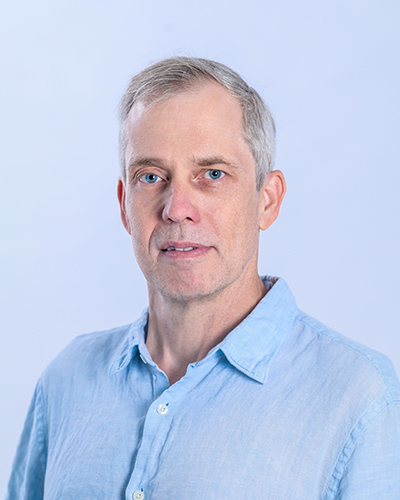
David Leopold, Ph.D.
Neurophysiology Imaging Facility
Research Topics
The Leopold laboratory studies brain mechanisms underlying visual perception. We approach this topic from two broad and somewhat distinct perspectives. The first perspective asks how visual regions of the cerebral cortex operate during natural modes of experience. For this, we study neural activity in the brain during full-field visual immersion, simulated self-motion, interaction with 3D objects, and active perception of complex scenes. The second perspective asks how early life visual experience shapes the organization and operation of specialized neural circuits. Of particular interest is the development of circuits dedicated to analyze certain types of social information, such as facial identity, and emotional expression, and bodily actions. We use cutting-edge technical methods to study these topics, often in combination. These methods include functional magnetic resonance imaging (fMRI), multielectrode electrophysiology, intrauterine viral transduction, and optogenetic stimulation of developmentally defined cell populations. One important motivation for studying the visual brain through the lenses of natural behavior and neurodevelopment is that these perspectives are most pertinent to the disruptions of visual cognition commonly observed in neuropsychiatric disorders.
Biography
Dr. Leopold attained a B.S. in biomedical engineering from Duke University in 1991. After receiving his Ph.D. in Neuroscience from Baylor College of Medicine in 1997, he conducted postdoctoral work at the Max Planck Institute for Biological Cybernetics in Tübingen, Germany. Dr. Leopold arrived at the NIH in 2004 to establish his own research laboratory and to head a core facility for brain imaging in nonhuman primates. He is now a Senior Investigator and Chief of the Systems Neurodevelopment Laboratory in the National Institute of Mental Health. He is also the Director of the Neurophysiology Imaging Facility, a joint core facility sponsored by the National Institute of Mental Health, National Institute of Neurological Disorders and Stroke, and National Eye Institute.
Selected Publications
Ribeiro Gomes AR, Hamel N, Mastwal S, Wright N, Ide DC, Richie CT, Usdin TB, Wang KH, Leopold DA (2026). Targeted gene transfer into developmentally defined cell populations of the primate brain. Cell Rep 45, 116756. https://doi.org/10.1016/j.celrep.2025.116756. [Pubmed Link ]
Takemura H, Kaneko T, Sherwood CC, Johnson GA, Axer M, Hecht EE, Ye FQ, Leopold DA (2024). A prominent vertical occipital white matter fasciculus unique to primate brains. Curr Biol 34, 3632-3643.e4. https://doi.org/10.1016/j.cub.2024.06.034. [Pubmed Link ]
Koyano KW, Esch EM, Hong JJ, Waidmann EN, Wu H, Leopold DA (2023). Progressive neuronal plasticity in primate visual cortex during stimulus familiarization. Sci Adv 9, eade4648. https://doi.org/10.1126/sciadv.ade4648. [Pubmed Link ]
Koyano KW, Taubert J, Robison W, Waidmann EN, Leopold DA (2025). Face pareidolia minimally engages macaque face selective neurons. Prog Neurobiol 245, 102709. https://doi.org/10.1016/j.pneurobio.2024.102709. [Pubmed Link ]
Leopold DA (2024). The big mixup: Neural representation during natural modes of primate visual behavior. Curr Opin Neurobiol 88, 102913. https://doi.org/10.1016/j.conb.2024.102913. [Pubmed Link ]
Building 49, Room 1E21, MSC 4400
BETHESDA, MD 20814
Phone: +1 301 594 0582
Fax: +1 301 480 1644