


Neuroscience and Novel Therapeutics Unit: Meet the Team
The Section on Neuroscience and Novel Therapeutics (NNT) is a group of dedicated, compassionate, and talented scientists, clinicians, trainees, and volunteers. Our expert, interdisciplinary team works together to study and develop new treatments for children with psychiatric illnesses through innovative research, clinical care, and community outreach.
Staff Spotlight

Anna Groszkowski, BA won the Three Minute Talk Competition at the NIMH IRP Retreat and received a 2026 NIMH Travel Award

Lauren Henry, PhD has received a 2026 Travel Award from the Society for Biological Psychiatry.

Cansu Erkan won the 2026 Anxiety Disorders Association of American Travel Award

Melissa A. Brotman, PhD, was awarded tenure at the NIMH IRP and is leading the Section on Neuroscience and Novel Therapeutics.
Lauren Henry, PhD received an NIMH 2025 K Career Award developing a mobile application to augment Parent Management Training for parents of youth with anger and irritability.

Dr. Melissa Brotman won the 2024 NIMH IRP Mentor of the Year Award. This is the second time she has received this award in recognition of her mentoring.

Dr. Lauren Henry won the NIMH IRP Seymore S. Kety Award for Clinical Research Excellence.

Kolin Lewis won an NIH NIMH Post bac Poster Day award for his work entitled "Irritability in childhood: Trajectories and relations to personality in emerging adulthood"

Our team of Trainees, Postdocs, and Clinicians developed a three-part series of virtual interactive activities of “Brain Talks” for elementary students that touched on what it’s like being a scientist at NIH, how the brain works, and the importance of mental health. We were excited to return to the classroom and engage with all the students in person this year. Our third group, shown here at Kemp Elementary School, focused on teaching kids emotion regulation strategies to help them calm themselves in stressful situations and manage difficult emotions. The students got to leave with a Feelings Wheel to help them communicate their emotions and create a self-care book of activities they enjoy and can practice to maintain a positive well-being. Our Branch plans to continue these fun educational lessons each year, hopefully in a classroom near you.

At the 24th Annual NIMH IRP Fellows Scientific Training Day, held September 29, 2022, Olufunmilayo (Ayo) Telli, BS (shown with her poster), an Intramural Research Training Award (IRTA) fellow and Undergraduate Scholarship Program (UGSP) scholar in Dr. Melissa Brotman's Neuroscience and Novel Therapeutics Unit, was awarded First Place in the 2022 NIMH IRP Outstanding Poster Award Competition for her poster on "Associations between Inconsistent Parenting and Child Irritability in a Clinical Sample." After her NIMH fellowship, Ayo plans to obtain MD and PhD degrees to become a physician scientist.

Melissa A. Brotman, PhD, was elected to be a Fellow in the American College of Neuropsychopharmacology (ACNP)
Lauren Henry, PhD has received a Travel Award from the American College of Neuropsychopharmacology (ACNP). At the 2022 ACNP Meeting in Phoenix, Arizona, Dr. Henry will present NNT’s work examining the reliability and validity of CALM-IT, a gamified and disseminatable mobile application-based inhibitory control task.

CALM-IT, a mobile app game designed by Melissa A. Brotman, PhD has won a 2020 Federal Health Innovation & Technology (FedHealthIT) Innovation Award.
Current lab members

Ramaris E. German, PhD Dr. Ramaris E. German is an associate clinical psychologist in the Section on Neuroscience and Novel Therapeutics. She has a broad range of clinical, research, and training experience working with children, families, and adults through her work at the University of Pennsylvania, American University, NYU-Bellevue Hospital Center, Washington DC VA Medical Center, Greenbelt Cares, and Neuropsychological Associates of Fairfax. Her research has focused on mechanisms in mood disorders, psychotherapy process, and outcome research, as well as in the dissemination and implementation of evidence-based practices. Before joining NIMH, Dr. German worked training community mental health therapists in evidence-based practices, including cognitive behavioral therapy, to increase access to quality mental health services through a partnership between the Philadelphia Department of Behavioral Health and the University of Pennsylvania (the Beck Community Initiative). I In her work in the Neuroscience and Novel Therapeutics Unit, Dr. German draws on her background in mood disorders, psychotherapy, and implementation research to help develop and evaluate novel psychotherapeutic treatments targeting the underlying brain mechanisms implicated in severe irritability in youth, with the goal of establishing empirically supported interventions for this population.

Jamell White, PhD, LCSW-C, LICSW Dr. Jamell White is a staff clinician for the Neuroscience and Novel Therapeutics Unit (NNT) in the Emotion and Development Branch at the National Institute of Mental Health (NIMH). Dr. White received her Ph.D. from the University of Maryland in Human Development and Quantitative Methodology. She also has master’s degrees in social work (Catholic University of America) and special education (Johns Hopkins University). Dr. White is a Clinical Assistant Professor of Psychiatry (Child and Adolescent) at Georgetown University School of Medicine as well as a Clinical Assistant Professor in the Department of Pediatrics at the George Washington University School of Medicine and Health Sciences. Prior to coming to the NIMH, much of Dr. White’s clinical work specialized in working with children, adolescents, and adults with Autism Spectrum Disorder and related disorders.

Wendy Sharp, LCSW-C is a staff clinician for the Neuroscience and Novel Therapeutics Unit (NNT) in the Emotion and Development Branch at the National Institute of Mental Health (NIMH). Ms. Sharp received her master’s degree in social work from Howard University and her bachelor’s degree from the University of Michigan. Prior to coming to the Emotion and Development Branch, Ms. Sharp worked at NIH on Attention-Deficit/Hyperactivity Disorder research examining genetic and environmental factors that influence the development of brain and behavior. One study explored novel treatments, delivered in virtual reality, that were tailored to each child’s unique profile of cognitive strengths and challenges.
Director, Research and Analytics

Simone Haller, PhD Dr. Simone Haller is the Director of Research and Analytics in the Neuroscience and Novel Therapeutics Unit (NNT). She completed her DPhil at the University of Oxford in Experimental Psychology with a focus on adolescent development and individual differences. At NNT, Dr. Haller studies the cognitive, computational, and neural processes that children and adolescents engage to regulate negative affect and select actions, such as approaching or avoiding a peer provocation. Her research focuses on understanding how these processes (e.g., social threat processing) are shaped by development and individual differences in anxiety and irritability, and how they can be targeted in interventions for youth with clinically significant levels of anxiety and irritability. In September 2020, she received a two-year NARSAD Young Investigator Grant from the Brain and Behavior Research Foundation for her project "Predicting longitudinal psychiatric effects of the COVID-19 pandemic in a transdiagnostic sample of youth using rest and task-based fMRI."
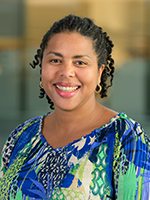
Marine Bouyssi-Kobar, PhD is a Staff Scientist in the Section on Neuroscience and Novel Therapeutics (NNT) at the National Institute of Mental Health (NIMH). She completed her master's degree in Biomedical Engineering at Polytech Marseille (France) and her Ph.D. in Neurosciences at George Washington University.
Dr. Bouyssi-Kobar brings more than 15 years of experience in pediatric neuroimaging and clinical research, working fluidly across disciplines — from direct work with research participants and clinical teams to close collaboration with MRI physicists and neuroimaging engineers. Proficient with both 3T and ultra-high field 7T scanners, she has conducted hundreds of MRI scans on children and adolescents, while taking ownership of key analytical, regulatory, and mentorship responsibilities across complex research programs.
Her research investigates how neurobiological, genomic, and environmental factors shape brain development in youth with neurodevelopmental and psychiatric disorders, including ADHD. Her expertise spans multimodal MRI techniques — resting-state fMRI, diffusion tensor imaging, and Magnetic Resonance Spectroscopy (MRS) — across the full arc of neurodevelopment, from fetal and neonatal stages through childhood and adolescence.
In her current role at the NNT, Dr. Bouyssi-Kobar is focused on advancing the section's neuroimaging capabilities in support of novel brain-based markers for youth with psychopathology, with a particular interest in identifying multimodal imaging markers that predict treatment response. She is also deeply committed to mentorship, supporting junior researchers in neuroimaging methods, scientific communication, and career development.
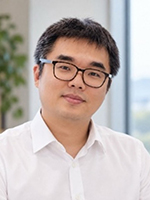
Kyunghun Lee, PhD Kyunghun Lee is a computational scientist and software engineer in the Section on Neuroscience and Novel Therapeutics (NNT) at the National Institute of Mental Health. He earned his PhD from the University of Maryland, College Park, focusing on machine learning, embedded system optimization, and automated detection and classification. At NNT, he develops computational methods, research software, and automated workflows for neuroscience research, including algorithms that process real-time data from wearable devices. Since 2023, Dr. Lee has also served as a Visiting Professor in Biocomputational Engineering at the University of Maryland, College Park, where he teaches Algorithms and Object-Oriented Programming in C++.

Zoë E. Laky, MA Zoë is a clinical psychology Ph.D. student at American University, advised by Dr. Nicole Caporino, participating in the Graduate Partnership Program as a predoctoral IRTA fellow with the Neuroscience and Novel Therapeutics Unit at the NIMH. She completed her undergraduate degree in Psychology at Bryn Mawr College, a minor in Child & Family Studies, and a post-baccalaureate research position with the Center for OCD and Related Disorders (CORD) at Harvard Medical School (HMS)/Massachusetts General Hospital (MGH), directed by Dr. Sabine Wilhelm. She is particularly interested in leveraging multi-method assessment and machine learning to disentangle developmental risk factors and mechanisms of youth internalizing and externalizing disorders. Clinically, she treats youth with anxiety, trauma- and stress-related problems, and obsessive-compulsive disorder using a combination of cognitive and behavioral techniques.
Lauren Henry, PhD Dr. Lauren Henry is a post-doctoral IRTA fellow with the Section on Neuroscience and Novel Therapeutics (NNT) in the Emotion and Development Branch at the National Institute of Mental Health. She received her MS in psychology and PhD in clinical psychology with a minor in quantitative sciences from Vanderbilt University. She completed her pre-doctoral clinical psychology internship with the Charleston Consortium. Dr. Henry is interested in contributing to the prevention of psychopathology in children and adolescents. Her research focuses on leveraging technology to (1) investigate mechanisms of risk for psychopathology and (2) develop, evaluate, and implement preventive interventions for psychopathology for large-scale dissemination to improve public health. At the NNT, Dr. Henry is applying her interests to a population of clinically impaired youth with irritability.

Rachel Puralewski, PhD Rachel Puralewski is a post-doctoral -IRTA fellow with the Neuroscience and Novel Therapeutics Section. She received her B.S. from the University of Pittsburgh (Pitt) in 2015 with majors in Neuroscience & English Literature and a minor in Chemistry. After graduating, she spent two years working as a research assistant at Pitt with Dr. Marianne Seney. She completed her Ph.D. in Neuroscience at the University of Wisconsin-Madison in 2023 under the mentorship of Dr. Ned Kalin. Her dissertation work described the early-life development of prefrontal and limbic brain function as it relates to the emergence of Anxious Temperament in rhesus monkeys. Dr. Puralewski’s research interests are improving characterization of 1) psychopathology-related behaviors and 2) neural circuits underlying the psychiatric disorders that emerge in childhood. She leverages functional Magnetic Resonance Imaging (fMRI) to investigate brain function during behavioral tasks, and neural circuit organization at rest. With the NNT, Dr. Puralewski is investigating how neural circuitry in childhood differs between healthy youth and those with extreme anxiety, irritability, and other psychopathology.
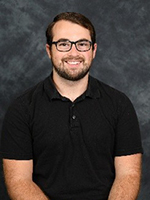
Nicholas Santopetro, PhD Nick is a post-doctoral IRTA fellow with the Section on Neuroscience and Novel Therapeutics (NNT). Nick graduated in summer 2026 from Florida State University with a PhD in Clinical Psychology and completed his doctoral internship training at the Kennedy Krieger Institute and Johns Hopkins University School of Medicine. His research seeks to examine whether reliable behavioral and neural measures can be leveraged to distinguish different phenotypes of psychopathology, with an emphasis on teasing apart neural markers unique to comorbid internalizing (e.g., depression, anxiety, DMDD) and externalizing (e.g., ADHD, ODD) disorders in youth populations. In particular, Nick wants to understand whether these behavioral and neural indices can be utilized to assist with predicting onset of mental health disorders and responsiveness to treatment.
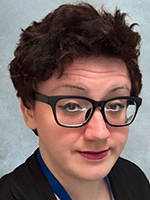
Shannon Grogans, PhD Shannon is a post-doctoral fellow with the Section on Neuroscience and Novel Therapeutics. She received her B.A. from Northwestern University in 2016 with majors in Cognitive Science (neuroscience concentration) & Psychology. After graduating, she spent three years working as an IRTA research fellow at NIMH with Dr. Karen Berman. She completed her Ph.D. in Clinical Psychology at the University of Maryland in 2026 under the mentorship of Dr. Alex Shackman. She completed her pre-doctoral clinical psychology internship with the Ohio State University Wexner Medical Center. Her dissertation work centered on understanding the relevance of threat-related neural circuitry to the emergence and recurrence of internalizing symptoms and disorders in emerging adults, with a particular focus on the extended amygdala. Broadly, Dr. Grogans’s research interests are to to look across the lifespan to understand (1) the neurobiological substrates of neuroticism/negative emotionality (N/NE) and other risk-conferring emotional traits, and the relevance of threat- and safety-related brain circuits to (2) real-world mood and (3) future internalizing symptoms and disorders. Her work integrates multiple techniques, including fMRI, clinical/life-stress assessments, smartphone ecological momentary assessment (EMA), and advanced statistical approaches in at-risk and clinical populations. With NNT, Dr. Grogans is investigating how differences in brain structure/function among healthy youth and those with anxiety and mood disorders relate to momentary emotional experience, symptom trajectories, and treatment outcomes.

Basith Faizal, MS Basith is a postbaccalaureate IRTA fellow within the Section on Neuroscience and Novel Therapeutics. He graduated in 2024 from Virginia Polytechnic and State University with a B.S. in Neuroscience and a minor in Psychology and graduated in 2025 from Georgetown University with a M.S. in Bioinformatics. At Georgetown University, he conducted research with Dr. Max Riesenhuber on developing similarity analysis data pipelines for EEG data to study the evolution of neural representation during category learning. Additionally he worked with Dr. Markus Hoffmann to optimize large scale genomic analysis workflows to identify genotype-phenotype associations within NIH's All of Us Research database. He is currently interested in applying machine learning and other computational techniques to develop clinically impactful interventions for anxiety and mood disorders in pediatric populations. After his fellowship, he plans on pursuing a PhD in Neuroscience or directly going into industry.
Anna Groszkowski, BA Anna is a postbaccalaureate IRTA fellow within the Section on Neuroscience and Novel Therapeutics at the NIMH. She graduated in 2025 from the University of Virginia with degrees in Psychology and Cognitive Science and a concentration in Linguistics. Her prior research experience was in Dr. Bethany Teachman’s Program for Anxiety, Cognition, and Treatment (PACT) Lab, where she worked on adapting a digital mental health intervention for Spanish-speaking adults with anxiety. She is currently interested in studying the factors underlying disruptive behavior disorders in children and adolescents, with the goal of developing more effective interventions for children and their parents in the future. Following her fellowship, Anna plans to pursue a PhD in Clinical Psychology.
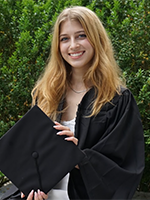
Aida (Rose) Delony, BS Rose is a postbaccalaureate IRTA fellow within the Section on Neuroscience and Novel Therapeutics at the NIMH. She graduated in 2025 from Emory University with degrees in Psychology and Linguistics. Her prior experience was within a group called the Nia Project at Atlanta’s Grady Hospital. She assisted in group therapy sessions and conducted clinical assessments with low-income African American women with histories of suicidality. She also conducted research within Dr. Roman Palitsky’s lab, by working on a systematic review that assessed historical trends in funding of U.S. psilocybin research. Currently, her interests focus on better understanding adverse childhood experiences with the goal of finding novel interventions for trauma especially in pediatric populations. After her NIMH fellowship, she plans to pursue a PhD in Clinical Psychology.
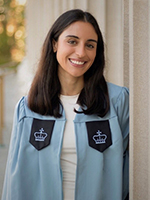
Lucia Kouri, BA Lucia is a postbaccalaureate IRTA fellow in the Section on Neuroscience and Novel Therapeutics. She graduated from Barnard College, Columbia University, in 2026 with a degree in psychology. Prior to her time at NIMH, she conducted research with Dr. Claudia Lugo-Candelas at the Columbia Irving Medical Center, examining longitudinal relationships between sleep health and emotion regulation in children with ADHD, as well as associations between maternal sleep health during pregnancy and infant neurodevelopmental and socioemotional outcomes. She also worked closely with Dr. Erica Musser at Barnard College, where she gained experience administering neuropsychological assessments. Her current research interests center on integrating neuroimaging with clinical measures to inform more effective treatments for pediatric mood and externalizing disorders. Following her fellowship, she plans to pursue a PhD in Clinical Psychology.
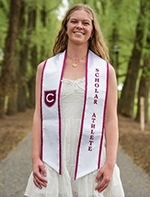
Chloe Sakowski, BA Chloe is a postbaccalaureate IRTA fellow with the Section on Neuroscience and Novel Therapeutics at the NIMH. She graduated from Colgate University in 2025 with a degree in Psychological Science. There, she completed an honors thesis with Dr. Lauren Philbrook examining how behavioral and physiological responses to stress relate to anxiety, depression, and executive functioning in youth. She is currently interested in better understanding the factors that contribute to mood and anxiety disorders and using this knowledge to improve treatment. After her fellowship, she plans to pursue a PhD in Clinical Psychology.
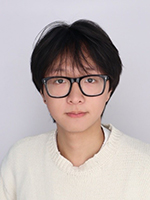
Kevin Zheng, BS Kevin is a postbaccalaureate IRTA fellow with the Section on Neuroscience and Novel Therapeutics at the NIMH. He graduated cum laude from Vanderbilt University in 2026 with a B.S. in Child Development and Cognitive Studies. At Vanderbilt, he conducted research with Dr. Kathryn Humphreys in the Stress and Early Adversity Lab, where he studied parental depression, parent–child interactions, and early brain development. He also worked with Dr. Brandee Feola, where he investigated anxiety, stress, and psychosis in individuals with schizophrenia-spectrum disorders. He is currently interested in understanding how early experiences, caregiving, and stress contribute to emotion-related psychopathology, as well as the neural mechanisms underlying anxiety and mood disorders. After completing his fellowship, he plans to pursue a PhD in Clinical Psychology.
Students in the Intramural Research Training Award fellowship program (IRTAs) serve a vital role in the lab, coordinating between all arms of the work so that clinical activities, data collection, and data analysis run smoothly. With extensive clinical exposure and mentorship, IRTAs enhance their knowledge and cultivate unique research and clinical skills facilitating their next educational endeavors. Check out where our Alumni are now:
Postbaccalaureate Fellows 2026
Julia Modell, BA
After completing her postbac training, Julia Model became a PhD student in clinical psychology at University of Miami.
Katherine Kim, BS
After completing her postbac training, Katherine Kim starting medical school at the University of Wisconsin, Madison
Cansu Erkan, BA
After completing her postbac training, Cansu Erkan became a PhD student in clinical psychology at the University of Maryland
Postbaccalaureate Fellows 2025
Kolin Lewis, BA
After completing his postbac training, Kolin Lewis became a PhD student in clinical psychology at Duke.
Grace Stohr, BS
After completing her postbac training, Grace Stohr became a PhD student at UCLA.
Lizzie Tandilashvili, BS
After completing her postbac training, Lizzie Tandilashvili became a PhD student in Clinical Psychology at the Catholic University of America.
Postdoctoral Fellows 2024
Lana Grasser, PhD
After completing her post-doctoral training, Lana Grasser is now a faculty member at Wayne State University, Department of Psychology and in the new Ben L. Silberstein Institute for Brain Health.
Postbaccalaureate Fellows 2024
Kenneth Fling, BS
After completing his postbac training, Kenny Fling became a PhD student in Clinical Psychology at the University of Maryland, studying under Dr. Andrea Chronis-Tuscano.
Eleanor Hansen, BA
After completing her postbac training, Eleanor Hansen became a PhD student in Clinical Psychology at the Yale University, studying under Dr. Dylan Gee.
Postdoctoral Fellows 2023
Reut Naim, Ph.D
After completing her post-doctoral training, Reut Naim is now a tenure track assistant professor at Tel Aviv University, Department of Psychology.
Postbaccalaureate Fellows 2023
Urmi Pandya, BS
After completing her postbac training, Urmi Pandya became a PhD student in Clinical Psychology at the University of Washington.
Postbaccalaureate Fellows 2022
Kelly Dombek, MA
After completing her postbac training, Kelly Dombek became a PhD student in Clinical Psychology at University of California, Berkeley.
Shannon Shaughnessy, BA
After completing her postbac training, Shannon Shaughnessy became a PhD student in Clinical Psychology at the University of Miami.
Postbaccalaureate Fellows 2019 – 2021
Allison Jaffe, BS
After completing her postbac training, Allison Jaffe started medical school at Northwestern University Feinberg School of Medicine.
Postbaccalaureate Fellows 2018-2020

Courtney Agorsor
After completing her postbac training, Courtney Agorsor became a PhD student in Counseling Psychology at University of Denver.
Hong Bui
After completing her postbac training, Hong Bui became a PhD student in Clinical Psychology at University of Maryland.
Hannah Grassie
After completing her postbac training, Hannah Grassie became a PhD student in Clinical Psychology at University of Miami.
Olga Revzina
After completing her postbac training, Olga Revzina became a PhD student in Clinical Psychology at The Catholic University of America.
Caitlin Stavish
After completing her postbac training, Caitlin Stavish became a PhD student in Child-Clinical Psychology at University of Washington.
Postbaccalaureate Fellows 2017-2019
Julia Brooks
After completing her postbac training, Julia Brooks became a PhD student in Clinical Psychology at the University of Illinois at Chicago.
Michal Clayton
After completing his postbac training, Michal Clayton became a PhD student in Clinical Psychology at Teachers College, Columbia University.
Andy Ross
After completing his postbac training, Andy Ross became a PhD student in Clinical Psychology at University of Rochester.
Samantha Perlstein
After completing her postbac training, Samantha Perlstein became a PhD student in Clinical Psychology at University of Pennsylvania.
Postbaccalaureate Fellows 2016-2018
Sofi Cárdenas
After completing her postbac training, Sofi Cárdenas became a PhD student in Clinical Psychology at University of Southern California.
Gretchen Perhamus
After completing her postbac training, Gretchen Perhamus became a PhD student in Clinical Psychology at University of Buffalo.
Ali Roule
After completing her postbac training, Ali Roule became a PhD student in Child-Clinical Psychology at Pennsylvania State University.